
On Grid Solar System
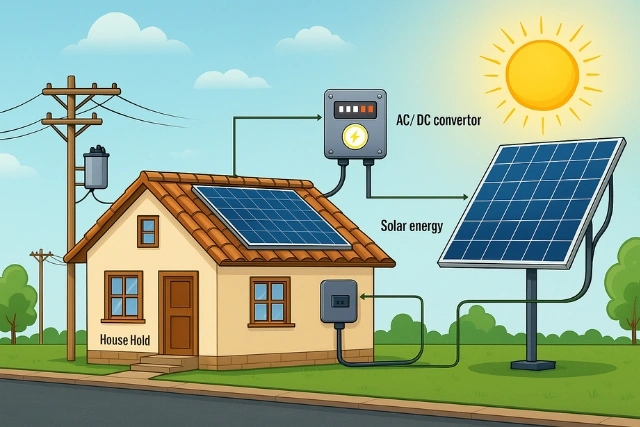
On Grid Solar System – Best Solar Power Solution for Homes & Businesses
The solar PV power generation on-grid system allows you to connect to the solar station with the national grid and exchange the energy according to the consumption.
on-grid or grid-tied solar system is a system that works along with the grid. This means that any excess or deficiency of power can be fed to the grid through net metering. Many residential users are opting for an On-grid solar system as they get a chance to enjoy credit for the excess power their system produces and save on their electricity bills. You will always have power either from the solar system or from the grid without battery system.
Why Switch to On Grid Solar System?
Highly cost-effective and easy to install.
Save up to 90% on monthly electricity bills.
Net metering benefits on extra power sent to the grid.
Payback period in just 3–5 years.
Low maintenance and long-lasting performance.
Environmentally safe and sustainable.
Government subsidy available for residential rooftops.
on-grid solar system, solar panels will continue to produce power during the day. This power can either be used instantly or exported to the grid with no backup for power outages. If at any time the system runs out of power, it draws the same from the electricity grid. Hence, a user will never run out of power in this case. Similarly, any excess that is produced by the system is fed to the grid. The advantage of an on-grid system is that the user will get a credit in his electricity bill for the extra power he sent to the grid.
On-Grid Benefits, Features, and solutions with ROI
Take full advantage of one of your most valuable assets – your green energy samving – with home & business from ON-GRID solar. Use advanced tools and embedded solar technology to get the fast, intelligent insights you need to adapt on the fly and outmaneuver the competition.
Solar Power System-On Grid System
- Cloud deployment
- BI, planning, and predictive capabilities
- Self-service Big Data analytics
- In-context collaboration
- Natural language processing
Enterprise Planning
- Cloud deployment
- Collaborative planning across LoBs
- Real-time plan alignment
- Embedded machine learning and analytics
- Single source of truth for all plans
Trusted and dependable rooftop solutions
- Solar Renewable Energy platform
- Reporting and analysis
- Data visualisation and Freedom
- Next-generation Solar
- End users Desktop & Mobile and self-service
Renewable Solar PV Panels
- Predictive modelling
- Model management and embedding
- on-grid solar panel systems, then we can help with that
- End-to-End and Edge-to-Cloud Platform
- Predictive network and link analy
Key Components of an On-Grid Solar System
To understand how an on-grid solar system functions, it is essential to know about its key components:
1. Solar Panels:
The solar panels are the heart of any solar energy system. These panels are made up of photovoltaic (PV) cells that trap sunlight and convert it into direct current (DC) electricity. The efficiency of the solar panels determines how much energy you can generate, which is why choosing high quality panels is crucial.
2. Inverter:
The electricity generated by the solar panels is in DC form, but your home appliances use alternating current (AC). This is where the inverter comes in. It converts the DC electricity from the solar panels into AC electricity. Inverters are a critical component so their efficiency impacts the overall performance.
3. Grid Connection::
The connection to the local utility grid is what makes on-grid systems unique. This connection allows you to draw power from the grid when needed and send excess energy back. A bidirectional metre is used to track the energy you consume from the grid and the energy you export, facilitating the net metering process.
Comparing On-grid vs Off Grid:
Off-grid systems operate independently from the utility grid, relying on battery storage for power when the sun isn’t shining. While they provide energy independence, they require a higher investment in batteries and maintenance. Conversely, on-grid systems are more cost-effective and efficient, especially in urban or suburban areas with reliable grid connectivity. On-grid systems have lower initial costs and do not need expensive batteries, making them a practical choice compared to the higher costs and maintenance of off-grid and hybrid systems.
Factors to consider before installing an on-grid solar system
The solar panels are the heart of any solar energy system. These panels are made up of photovoltaic (PV) cells that trap sunlight and convert it into direct current (DC) electricity. The efficiency of the solar panels determines how much energy you can generate, which is why choosing high quality panels is crucial.
- Site Assessment: A professional site assessment will determine whether your home receives enough sunlight and has adequate roof space for solar panels. Factors like shading, roof orientation, and local climate play a significant role in the system’s efficiency.
- Sizing Your System: The size of your solar system should match your energy consumption needs. This involves calculating your average daily energy use and ensuring that the system you install can meet these demands.
- Connecting to the Grid: The installation process includes securing permits, installing the solar panels and inverter, and connecting the system to the grid. Working with a certified installer ensures that the process is smooth and that your system is up to code.
Financial Incentives and Government Support
To encourage the adoption and usage of solar energy, many governments offer financial incentives:
- Solar Subsidies: Many regions offer subsidies, discounts, or tax benefits for solar installations, which can significantly lower the initial cost of your system. These incentives vary by location, so it is essential to research for what is available in your area.
- Electricity Buyback and Net Metering: These programs let you sell any extra electricity your solar panels generate back to the grid. This means you can earn money for the surplus energy, helping you recover the cost of your solar system faster and boost your savings.
Advantages of On Grid Solar Systems
On grid solar systems offer several benefits that make them an attractive option for homeowners and businesses looking to reduce their energy costs and environmental impact.
1. Cost Savings:
By generating your power, you decrease your reliance on the utility company, which translates into lower monthly energy costs. Over time, the savings can offset the initial investment in the solar system, making it a financially good choice.
2. Net Metering:
Many regions offer net metering programs, which allow homeowners with on-grid solar systems to earn credits for the excess electricity they send back to the grid. These credits can then be used to offset the cost of electricity you consume from the grid, further reducing your overall energy costs.
3. Low Maintenance:
On-grid solar systems are relatively low maintenance compared to other types of renewable energy systems. Since there are no batteries involved, the system’s complexity is reduced, and the components generally require minimal care. Regular cleaning of the solar panels and periodic inspections are usually sufficient to keep the system running efficiently for many years.
Impact of Power Outages on On-Grid Solar Systems
One of the key considerations for on-grid solar systems is their reliance on the grid for smooth operation. In India, where power outages can be frequent, it is important to understand how they affect on-grid systems. When the grid goes down, on-grid solar systems automatically shut off as a safety measure to prevent electricity from being fed back into the grid, which could endanger utility workers repairing the lines. This means that during a blackout, even though your solar panels may still be generating electricity, it won’t be usable unless you have battery storage or a backup system.
However, adding a battery backup or exploring hybrid solar options can provide a solution, allowing you to store excess energy and access it during outages. While on-grid systems are cost-effective and efficient for daily use, it is important to evaluate your local electricity reliability and consider whether an additional investment in storage might be worth the long-term benefits for energy security.