
Industrial Solar System
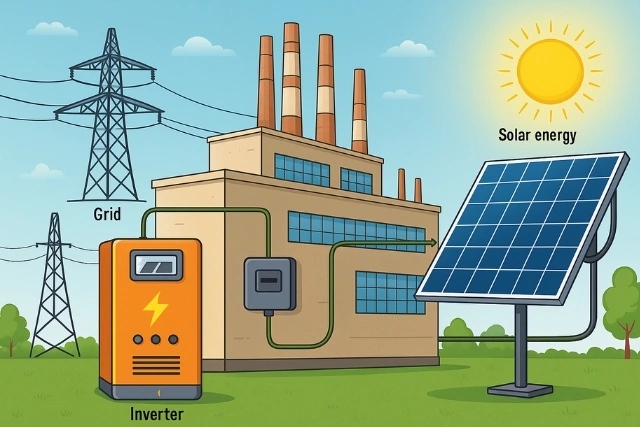
Industrial Solar System is a high-capacity and high-performance energy solution designed for large-scale factories, manufacturing units, warehouses, processing plants, and industries operating heavy machinery.
This system provides consistent and large amounts of power, helping industries meet their high-energy needs without interruption.
The purpose of Industrial Solar System is to reduce electricity expenses, decrease production costs, and make businesses more profitable.
How Does an Industrial Solar System Work?
- High-Capacity Solar Power Generation: Industrial solar panels (Mono PERC / Bifacial / TopCon) convert sunlight into DC electricity on a large scale, which powers heavy machinery, motors, CNC machines, processing units, and more.
- Three-Phase Grid Integration: Industrials use 3-phase power. Industrial solar systems synchronize with the grid to maintain a consistent power supply, eliminating load fluctuations.
- Advanced Inverter Optimization: Industrial inverters handle large capacities and maintain a good power factor. They balance loads according to demand and provide stable power to machines.
- Net Metering for Energy Export: Excess power is sent back to the grid. Net metering provides industries with additional revenue or savings on their electricity bills.
- Smart Energy Management Systems: Energy monitoring systems in large industries track production, consumption, and savings in real time.
Benefits of Industrial Solar Systems for Factories & Manufacturing Units
- Massive Reduction in Electricity Bills: Electricity bills are the largest cost in industries. Industrial solar systems reduce this expense by 60–80%.
- Stable and Consistent Power Supply: Power stability is crucial for machines. Solar systems maintain stable voltage and frequency, reducing the risk of breakdowns or damage.
- Higher Production Efficiency: Consistent and stable power increases machine productivity and reduces the likelihood of production outages.
- Long-Term ROI & Cost Savings: Industries recoup their investment within 3–4 years and benefit from free electricity for up to 25+ years.
- Eco-Friendly & Better Compliance: Large factories meet environmental standards by reducing CO₂ emissions and qualify as Green Industries.
- Low Maintenance: Industrial solar systems are robust and heavy-duty, requiring very little maintenance.
Types of Industrial Solar Systems Available in India
Medium Capacity Industrial Plants (100 kW – 500 kW):
Ideal for medium-sized factories, food industry, auto parts, textiles, etc.
Large Industrial Solar Plants (500 kW – 2 MW):
Manufacturing units, processing plants, warehouses that use electricity 24×7.
Mega Industrial Solar Plants (2 MW – 10 MW+):
For large industrial parks, steel plants, pharma, cement, automobile industries, and large factories.
Cost of Installing an Industrial Solar Plant in India
The cost of an industrial solar system depends on several factors:
- System Size & Capacity: The larger the capacity (kW/MW), the higher the cost, but the cheaper the per unit of electricity.
- Panel & Inverter Quality: Bifacial or TopCon panels, heavy-duty industrial inverters affect the cost.
- Installation Type: Tin shade, RCC roof, or ground-mounted structures vary in cost.
- Electrical Design & Safety Requirements: Costs may vary due to high safety standards in industries.
- Average Industrial Solar Plant Cost: ₹35,000/kW – ₹55,000/kW (grid-connected, without batteries)
Government Subsidies and Industrial Incentives
Although large industrial projects are not eligible for subsidies, industries can benefit from:
- 40% Accelerated Depreciation (AD) Benefit
- GST Input Credit
- Net-Metering Benefits under State Policies
- Carbon Credits / Renewable Energy Certificates (RECs)
These benefits provide industries with benefits in both electricity usage and costs.
Industrial Solar System Maintenance and Longevity
- Panel Cleaning: Dust, pollution, and industrial smoke impact the efficiency of panels—regular cleaning is essential.
- Inverter Check-ups: Heavy-duty industrial inverters require periodic inspections.
- Safety Inspections: Routine checks of earthing, cabling, MCBs, and SPDs ensure a safe system.
- 24×7 Monitoring Systems: Real-time analytics maximize system performance.
Industrial solar plants last 25–30 years, while inverters have a lifespan of 10–12 years.
Conclusion
If your business is struggling with electricity costs or looking to reduce production costs, an Industrial Solar System is the smartest and most profitable solution. It provides stable and free electricity for 25+ years, providing stable power to machinery and increasing your business’s productivity exponentially.
Industrial-grade solar systems prepare businesses for the future with cutting-edge technology, robust design, and superior performance.